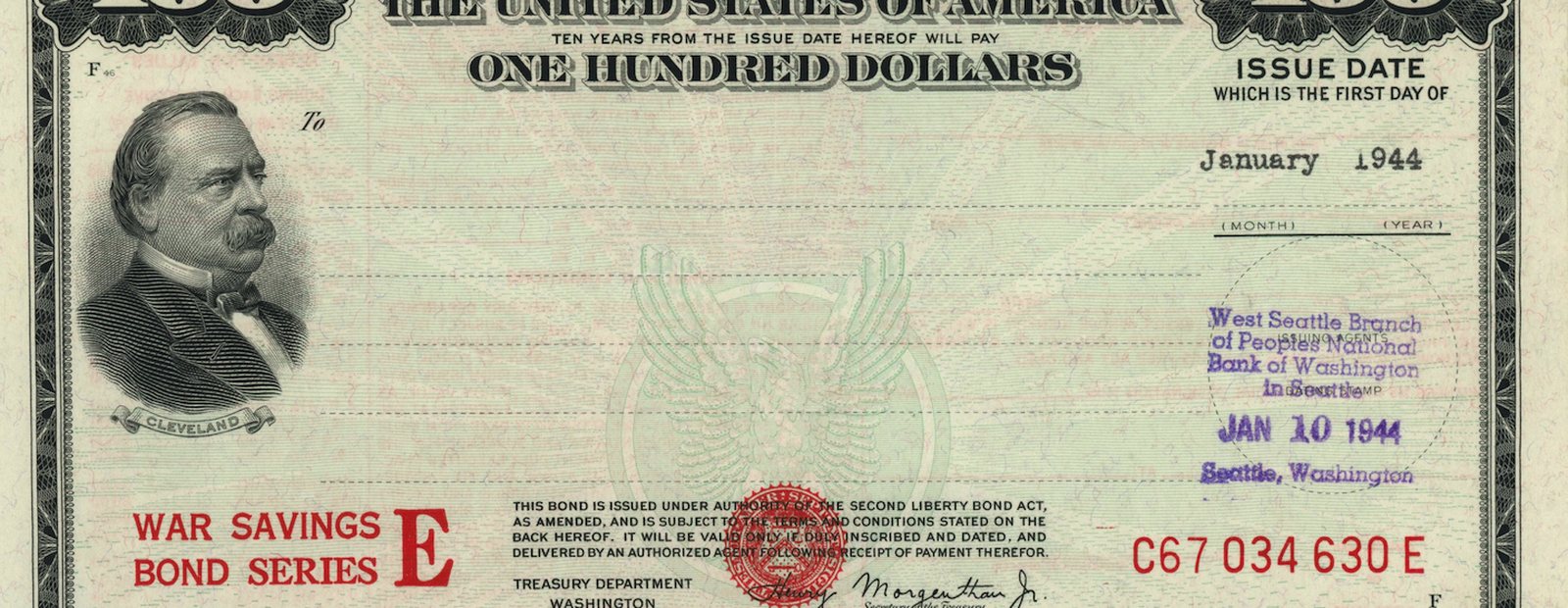
In May 1941 a factory worker could walk up to a window at a bank or a post office, put down $18.75, and walk away with a piece of paper that said $25 on it. The paper was a promise. Hold it 10 years and the Treasury would hand over the $25. Nothing to sign, nothing to understand, nothing to watch. Put it in a drawer.
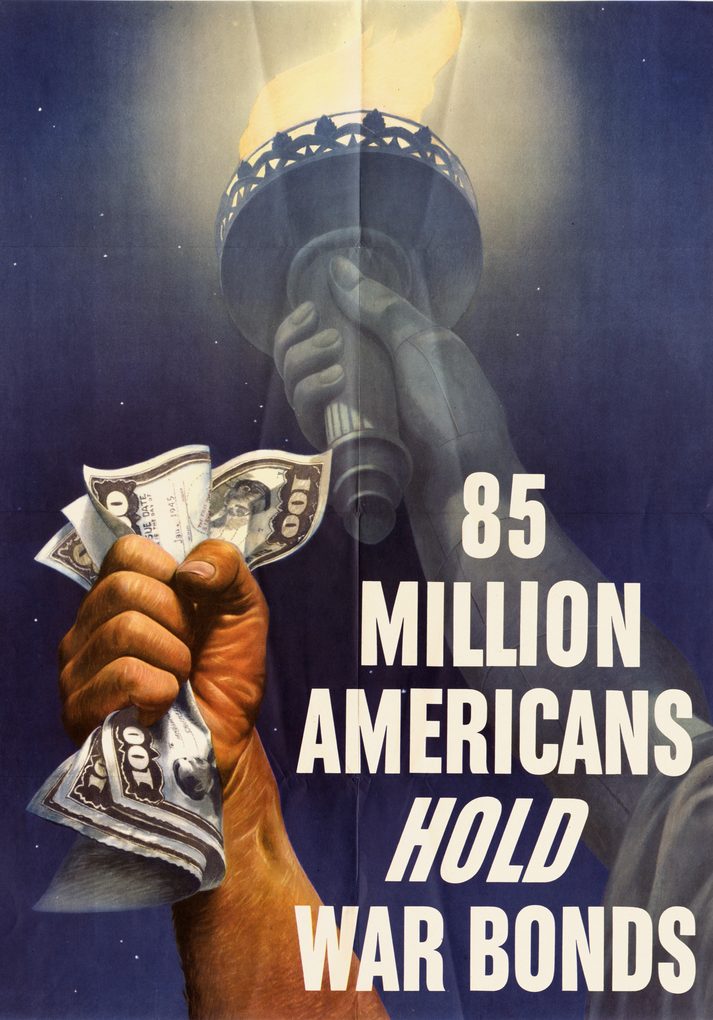
By the end of the war the Treasury's own posters said 85 million Americans had done exactly that. Out of a population of about 140 million, that is 6 in every 10 people in the country, children included. The Series E bond became, in the Treasury's own description, the most widely held security in the world.
It was also, for every one of those 85 million people, a losing trade. Not a scandal. Not a default. The $25 arrived on schedule. But the $25 that arrived in 1951 bought less than the $18.75 that went in.
The Terms
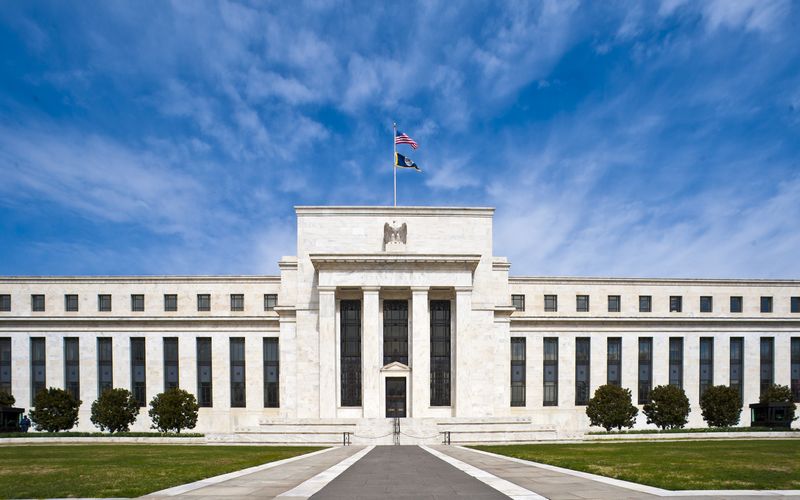
The Series E bond was sold at 75 percent of its face value and matured in 10 years. $18.75 became $25, which works out to 2.9 percent a year, compounded. That was the whole product. Denominations ran from $25 up to $1,000, and the Federal Reserve, which handled the paperwork, recorded that most of what it issued was in the smallest sizes. This was a bond for people who had never owned a bond.
It was sold the way nothing has been sold since. Payroll deduction plans took a slice of the paycheck before the worker saw it. Movie theaters ran bond drives between features. Schoolchildren bought stamps and pasted them into books until the book was worth a bond. Seven national War Loan drives, one after another, raised about $136B in the dollars of the day.
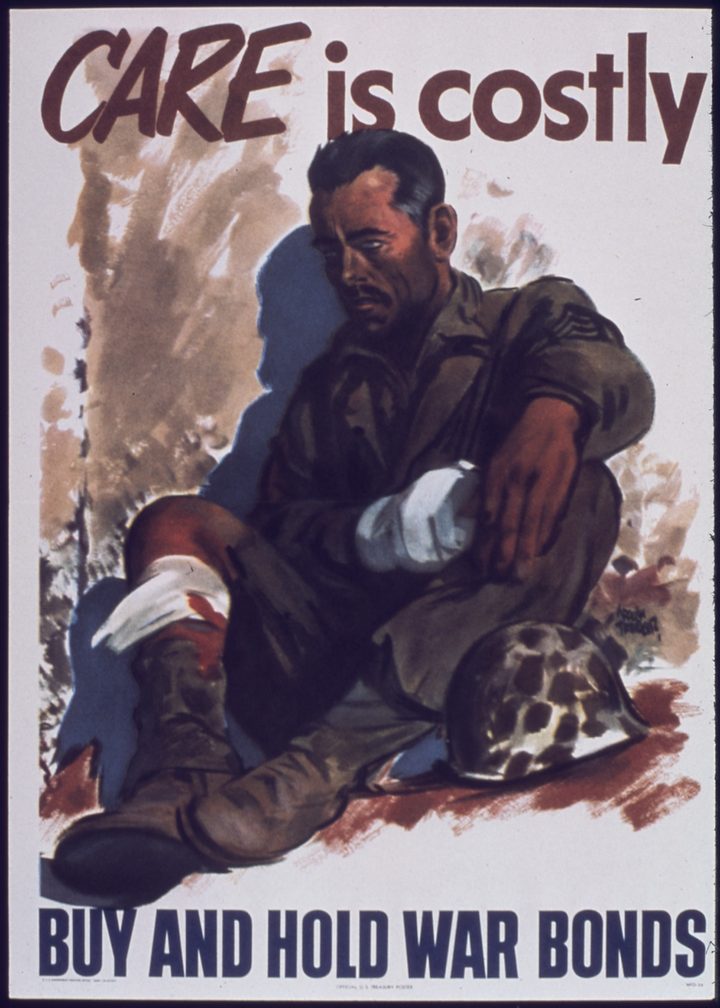
The poster with the raised fist gripping a handful of cash does not say buy. It says hold.
The Ceiling
2.9 percent sounds modest until you see what the alternatives paid. From July 1942 the Federal Reserve pegged the rate on Treasury bills at three eighths of 1 percent and held the long bond near 2.5 percent, and it bought whatever quantity was needed to keep those numbers from moving. That arrangement lasted, in one form or another, until 1951.
The peg is the subject of the piece this one grew out of. What matters here is narrower. The peg put a ceiling on what any lender to the Treasury could be paid, and the citizen at the post office window was a lender to the Treasury. 2.9 percent was not a reward. It was the most the ceiling allowed, dressed up as generosity.
The ceiling had a second job. Every dollar that went into a bond was a dollar that did not go into a store. With factories building tanks instead of cars and refrigerators, there was more money in circulation than things to spend it on, and the bond drive was designed to soak that money up before it could push prices. The bond was not only how the war was paid for. It was how the inflation was postponed.
Postponed. Not prevented.
The tool that prevents rather than postpones is the other one the war built. 7 million tax returns became 50 million.
The Drawer
Follow one bond from the window to the drawer to the bank.
$18.75 goes in during May 1941. The bond does what it says, accruing toward $25 at 2.9 percent, year after year, and in May 1951 it is redeemed for $25.00 exactly. Promise kept.
Now follow the price level over the same 10 years. Consumer prices rose 80 percent between May 1941 and May 1951. A basket of goods that cost $18.75 when the bond was bought cost $33.72 when it matured.
So the holder needed $33.72 back to be where they started. They got $25. In the money of the day they had bought the bond with, the $25 was worth $13.90. Held for a decade, honored to the penny, the bond returned 26 percent less than went into it.
The two lines run close together through the war, because price controls held the lid on. Then in 1946 the controls came off and prices jumped a third in 3 years. The bond, still doing exactly what it said, could not follow. Everything the ceiling had held back arrived at once, and it arrived while the bond was sitting in the drawer.
That is what postponed means. The inflation the bond was sold to prevent was delivered to the bondholder, in a lump, before the bond came due.
The Mountain
Federal debt went from 44 percent of the economy in 1941 to 119 percent in 1946. It is the highest the ratio has ever been. Then it came down, and by 1960 it stood at 54 percent, roughly where it had been in 1939.
In 1946 the debt was $271B. It dipped to $252B by 1948, was back at $271B by 1955, and stood at $290B in 1960. Over 14 years it barely moved. The mountain in the chart is the denominator, the economy underneath the debt more than doubling in dollar terms while the debt sat nearly still.
Half of that doubling was real. The country was bigger, richer, more productive in 1960 than in 1946, and that is the good half of the story. The other half was the price level, which rose 50 percent over the same years. Every dollar of debt was repaid with a dollar that bought less, and the people who supplied those dollars in 1943 were the people holding the drawer.
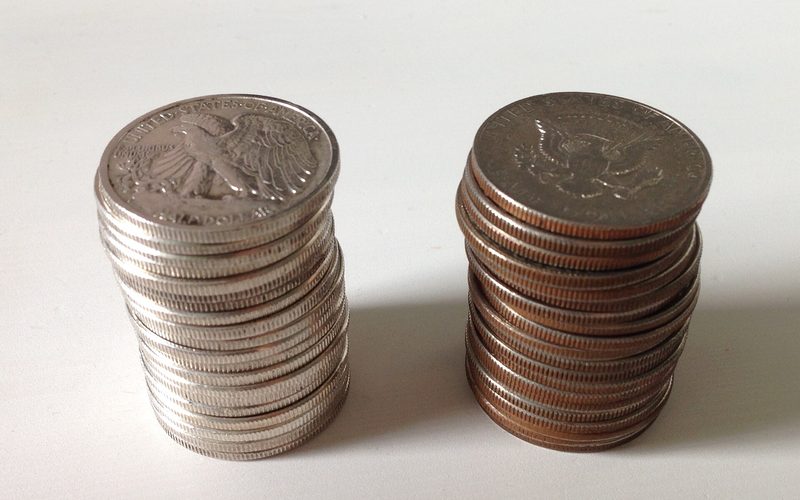
I have written about who pays for that elsewhere, using two piles of quarters. The war bond is the same lesson at the scale of the whole country. Nobody was defaulted on. Nobody had their savings confiscated. 85 million people were paid exactly what they were promised, and the value left anyway, through the only door it ever uses.
The Comfortable Case
The war had to be paid for. The choices were taxes, borrowing, or printing, and the country did all three. Borrowing from citizens at a low rate was a great deal less destructive than printing, and a great deal more possible than taxing at the level the war actually cost. The bond drives spread the burden across 85 million people instead of concentrating it, and they gave those people a stake in the outcome that a tax bill never could.
The bonds did soak up purchasing power, and prices during the war years rose far less than they would have otherwise. The controls held, in part, because the money was in drawers instead of stores.
And the holders got their $25. Every one of them. In an era when the memory of bank failures was 10 years old, a government promise kept to the penny was worth something in itself, and plenty of families were glad of the $25 when it came.
All of that is true. It is also true that the loss was real, that it was known to the people who designed the program, and that it was never printed on the bond. The Treasury sold safety and delivered safety. What it did not deliver was value, and the difference between those two words is 26 percent of a decade's saving.
Why Nobody Sells Them
There has not been a bond drive since. The Series E kept going in peacetime and was retired in 1980, but the posters, the theaters, the payroll clerks with the sign-up sheets, all of that ended with the war. It only worked once.
The Series E paid patriotism in place of yield. It could do that because the country was at war and the buyer was not comparing rates. Take the war away and the buyer is comparing rates again, and a bond that pays less than inflation loses to a savings account, a house, or a share of anything.
So the Treasury changed customers, and the room where it sells now has 26 firms required to show up. Today it sells to primary dealers, money market funds, pension plans, foreign central banks, and its own central bank. Those buyers are not asked to hold for love of country. They hold because the rules require them to, because the paper is the collateral that everything else runs on, or because their own currency is pegged to it. The debt is still bought by the public. The public just no longer knows it is buying.
Ordinary people did not stop lending to the government. They stopped being able to see it. A worker in 1943 could open the drawer and look at the loss. A worker today holds the same paper through a retirement account, a bank deposit, an insurance policy, and never sees a bond at all. The ceiling is still there. The loss is still there. The drawer has been moved somewhere the holder cannot open it.
If the price of the debt is no longer set by a peg or a poster, who sets it, and how? The answer is an auction, several times a week, and the buyers in that room are the ones who decide what the country pays.
Hold
Not buy. Hold.
It was good advice for the war. It was the worst possible advice for the decade after, and the Treasury knew both of those things when the poster went up. The loss that the ceiling created had to land on somebody, and holding is how you volunteer for it.
That has not changed. Every dollar of government debt is held by someone, and whoever holds it takes the difference between what it pays and what things cost. In 1941 the government had to ask 85 million people to do that, and put their number on a poster, and tell them it was their duty.
It no longer has to ask. The holding happens by itself now, in accounts nobody opens, and there is no poster because there does not need to be one. The drawer is full. It is simply not in your house anymore.
Figures: Series E terms from the Treasury's history of the savings bond program. Treasury bill peg from Federal Reserve History. War Loan drive total from the National WWII Museum. Consumer price index, federal debt and gross domestic product from the Federal Reserve Economic Database, series CPIAUCNS, FYGFD and GDPA. The 85 million figure is the Treasury's own, from a 1945 poster.
This is general economic writing and not financial advice. Nothing here is a recommendation to buy, sell or hold anything, and none of it accounts for your circumstances.