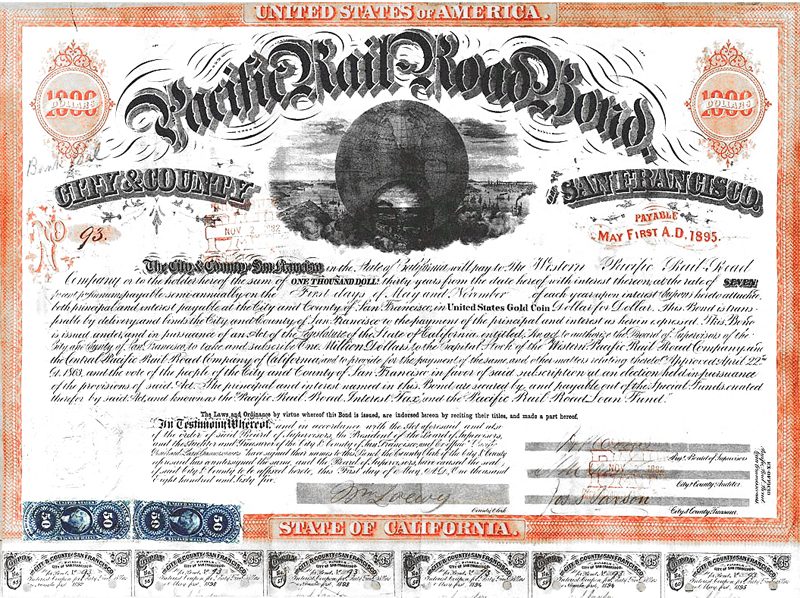
Take two bonds and lay them side by side. One is issued by a railroad, the other by the Treasury. Both say the same thing in nearly the same words. The bearer will be paid $1,000 on a date 10 years out, with interest along the way. Same paper, same promise, same lawyer's phrasing.
They are not the same thing at all, and the difference between them is the difference between the two ways a lender can lose.
The Two Promises
The railroad's promise is backed by whatever the railroad earns. Freight, passengers, land. If those dry up, the railroad has no way to produce the $1,000, because a railroad cannot make dollars. It can only collect them. When it runs out, it goes to a courtroom, the bondholders line up with everyone else it owes, and they take what is left. That is a default, and it is loud. There is a date, a filing, a headline.
The Treasury's promise is backed by something the railroad does not have. The dollar it owes you is the dollar it makes. Not the Treasury alone, but the Treasury and the central bank together, and between them there is no quantity of dollars they cannot produce. The government can choose not to pay, and there have been a few political standoffs where it flirted with that. But it cannot be forced not to pay, the way the railroad can, because it can never run out of the one thing it promised.
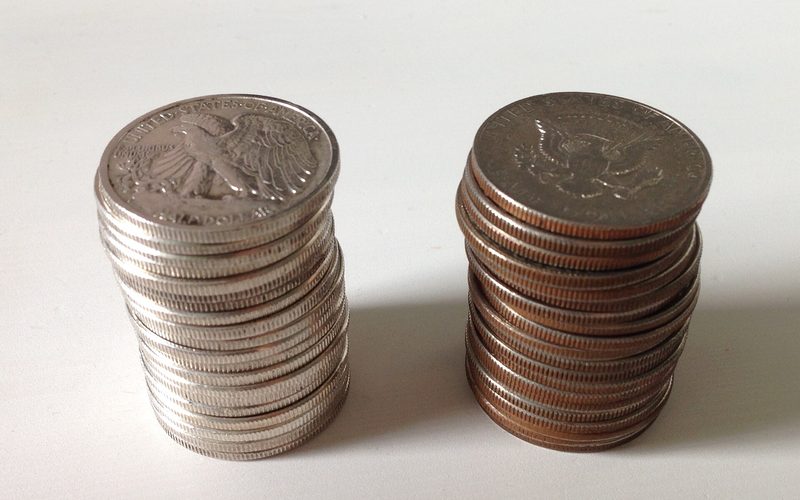
That single fact is what people mean when they call Treasury debt risk-free. It means you will get your dollars. It says nothing about what the dollars will be worth. I have written about that second question with two piles of quarters, and with 85 million war bonds. The government's lenders are never defaulted on. They are paid, in full, in a currency the borrower controls.
The Spread
The market has always known the difference, and it prices it every day. The price is the spread: how much more a company has to pay to borrow than the Treasury does, over the same term.
In 1929 a solid, middle-grade corporate borrower, the kind Moody's rates Baa, paid about 5.9 percent to borrow long-term. The Treasury paid 3.6. The spread was 2.3 percentage points, and that gap was the market's estimate of the odds that the company would not be there in 10 years.
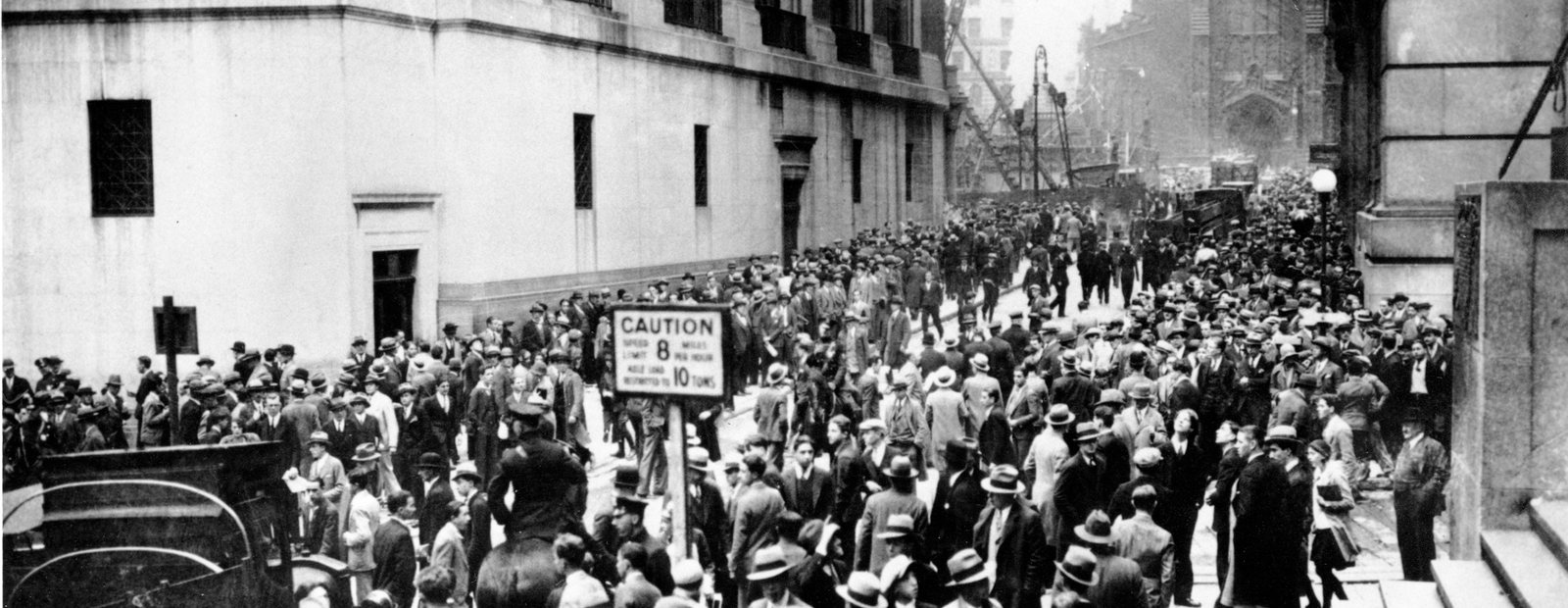
Then the depression arrived. By 1932 the Baa borrower was paying 9.2 percent. The Treasury was paying 3.7. The spread had gone from 2.3 points to 5.5. The companies had not become 3 points more dishonest. The country had simply stopped buying what they sold, their debts had not shrunk to match, and lenders were now pricing the real chance that a great many of them would never pay.
Look at what the Treasury's line did over those same years. Nothing. It sat near 3.5 percent while everything around it caught fire. That is not because the government was managing its finances well. Its tax receipts had collapsed and its debt was climbing. The Treasury's borrowing cost held steady because the market understood that whatever happened to the economy, the Treasury would produce the dollars. Doubt had nowhere to attach.
The Tell
In a panic, corporate yields rise and Treasury yields fall. They move in opposite directions.
Across 2008 the Baa borrower paid about 7.5 percent on average and the Treasury about 3.7. By early December the gap between them, measured day by day, reached 6.2 points, the widest in the modern record. But it widened from both ends. Companies were charged more, and at the same time the Treasury was charged less, because the money leaving corporate bonds had to go somewhere, and it went to the one borrower that could not be forced into a courtroom.
That is the tell. When people are frightened they do not want yield. They want the promise that cannot be broken by circumstance, and they will accept less for it, sometimes almost nothing. In 2020 the Treasury borrowed for 10 years at under 1 percent while the Baa borrower paid 3.6. The Treasury did not earn that rate. It was handed it, by lenders who had run out of places to hide.
It is also why the war bond could pay 2.9 percent and sell to 85 million people. Safety was the product, and safety is the one thing the borrower who prints the dollar can always deliver.
The Comfortable Case
The obvious reply is that the corporate bond pays more, and over a long enough stretch, across enough companies, the extra yield is worth the occasional loss. That is true, and it is the entire business of corporate credit. The spread is not a warning to avoid the railroad. It is the fee for lending to it, and most years the fee is collected and no railroad fails.
It is also true that the Treasury's promise has a cost of its own. A lender who takes the risk-free rate is paid in dollars whose value is decided by the borrower. The railroad cannot dilute you. It can only fail you. Inflation eats its bond exactly as it eats the Treasury's, but the railroad did not cause it and cannot; it has no printing press.
So the comfortable case is right that the corporate bond is a fair trade. What it misses is that the Treasury bond is a trade too. It only looks free because the price is not printed on it.
Two Ways to Lose
Set the two bonds side by side one last time, 10 years on.
The railroad either paid or it did not. If it did not, you know the day, the amount, and the reason, and you have a claim in a court that will be settled with a number. The loss is total or it is nothing, and either way it is visible.
The Treasury paid. It always pays. The $1,000 arrived. Whether it is $1,000 of 10 years ago or something less is a question the bond does not answer, and the loss, if there is one, has no date, no filing, and no headline. It is spread across every day of the decade in amounts too small to notice, and it was never called a default, because it never was one.
That is the choice a lender is actually making when they pick between the two pieces of paper. Not risk against safety. A loud loss that might not happen, against a quiet loss that has happened in nearly every decade on record.
The Price of Doubt
The spread is a price for doubt, and the Treasury's is the only borrowing in the world where the doubt is zero. It is why the whole financial system is built on Treasury paper, why every other bond is priced as a spread over it, and why when the world is afraid it runs toward the borrower that prints the dollar rather than away.
But zero doubt about payment is not zero doubt about value. The market prices the first. Nobody prices the second, because there is nothing to price it against. The Treasury bond is the yardstick, and you cannot measure a yardstick with itself.
So the question that follows is who does set the Treasury's rate, if not doubt. The answer is a room, an auction, and a handful of firms that are required to show up. That is the next piece.
Figures: Moody's seasoned Baa corporate bond yield, the long-term United States government bond yield, and the 10-year Treasury constant maturity yield, all from the Federal Reserve Economic Database, series BAA, LTGOVTBD, GS10 and BAA10Y. Annual figures are averages of monthly values. The December 2008 peak is a daily reading.
This is general economic writing and not financial advice. Nothing here is a recommendation to buy, sell or hold anything, and none of it accounts for your circumstances.