Nobody in this piece is real. Every number is.
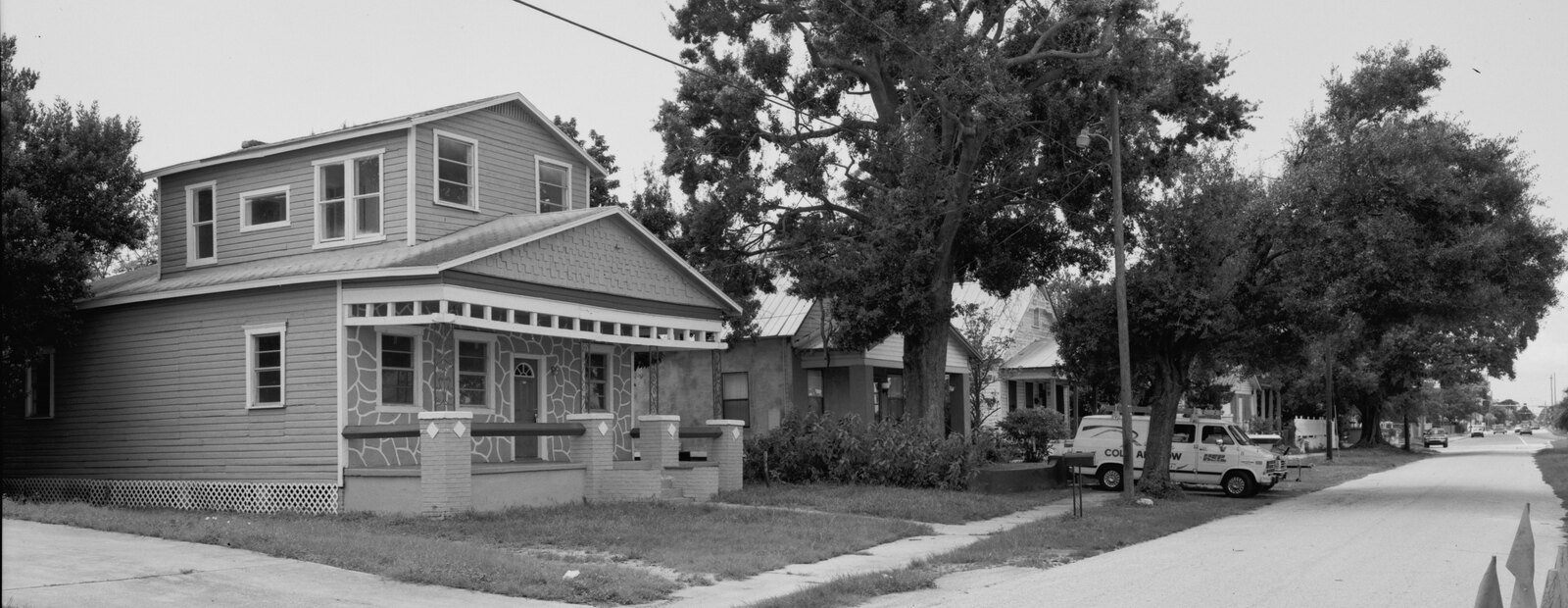
Picture a woman who made her last mortgage payment two years ago. She bought the house in 1994 for $78,000, well under that year's national median of $130,425, because it was a starter house on a starter street and that was the point.
She financed the whole thing at 8.38 percent, the average 30-year rate that year. The payment came to $593 a month. She made it 360 times.
She is 74 now. Social Security pays her about $2,083 a month, the national average for a retired worker, or $24,996 a year.
The house two doors down sold last spring for $615,000. Her county reassessed hers to match.
Her tax bill this year is $8,100. That is $675 a month.
She paid $593 a month to buy the house. She pays $675 a month to keep it.
Thirty years of payments ended and the monthly cost of the house went up.
The Part Nobody Budgets
The plan she followed is the most widely recommended financial plan in America. Buy a modest house, take the fixed rate, pay it off, live free. I have made the case for the first three steps myself, because a fixed rate mortgage during an inflationary stretch is one of the few positions where an ordinary household gets the same deal the government gets, which is a long obligation in dollars that shrink: A House Used to Cost 6,900 Hours.
That argument holds. It is just narrower than it sounds, because it only covers the part of the house you borrowed.
A mortgage has a last payment. Property tax does not. The mortgage is fixed and the tax is not. Those two sentences are the whole subject, and the second is doing something the first cannot offset.
Her income cannot offset it either. Social Security adjusts for consumer prices. Her house is not a consumer price.
Two States, One House
Here is where the story stops being one story.
Put the identical woman, the identical house, the identical 1994 purchase in two different states. Everything about her is the same. The only thing that changes is which legislature wrote the rules.
In Florida, the assessed value of a homesteaded property cannot rise more than 3 percent a year, or the change in the consumer price index, whichever is lower. In 2025 that came in at 2.9 percent. It is called Save Our Homes, it sits in the state constitution, and it runs from the year after the homestead exemption is granted until the day the property changes hands.
Run her purchase forward under that rule. A $78,000 base compounding at the 3 percent ceiling for 31 years produces an assessed value near $200,856. Subtract the $50,000 homestead exemption and about $150,856 is taxable. At the 20 mills a Hillsborough County address runs, the bill is roughly $3,017 a year, or $251 a month.
Same house. Same $615,000 market value. Same woman.
$675 a month in one state. $251 in the other. The difference is $5,088 a year, which is more than 20 percent of her entire income, and she did nothing to earn it except live at that address.
Notice what the cap is holding back. Her market value is $615,000 and her assessed value is $200,856, so $414,144 of what the house is worth is simply not taxed. Her largest asset, and two thirds of it is invisible to the county.
Why the Gap Got So Wide
That shelter did not come from the cap being generous. It came from the market being fast.
Her house went from $78,000 to $615,000 in 31 years, or 6.9 percent a year. The cap allowed 3. When the market runs at more than twice the ceiling for three decades, the wedge between market value and taxable value opens enormously, and the longer she stays the wider it gets.
Which tells you exactly when a cap is worth something. A cap protects you only by the amount appreciation exceeds it. Had her house appreciated at 3 percent, the cap would have done nothing at all, because the ceiling and the market would have risen together the whole way.
One year at 6.9 percent against a 3 percent ceiling is a rounding error. Thirty one of them is $414,144.
Where There Is No Cap
Roughly half the states place no statewide limit on how fast an individual assessment can rise or on how much a locality can collect. In those places, when the house two doors down sells for $615,000, the assessor's job is to say hers is worth about $615,000, and the bill follows.
That is not a loophole. It is the system working as designed. The assessment is supposed to track market value, and market value is set by what the neighbors did, which she has no say over and no way to decline. Her tax bill is determined by other people's transactions. She is not a participant in the market that prices her obligation. She is a bystander being invoiced for it.
The rates vary more than most people expect. The national average effective rate runs near 1 percent of value. New Jersey runs about 2.23 percent and Illinois about 2.07, while Hawaii collects about 0.29. On a $600,000 house that is the difference between roughly $13,000 a year and roughly $1,700, a factor of 7 for the same house in the same country.
Her 1.32 percent is unremarkable. That is the point. She is not in a punitive jurisdiction. She is in an ordinary one.
The Honest Part
Now I have to take apart my own comparison, because the Florida number above is doing something sneaky.
Florida looks cheap in her case only because she held the house for 31 years. Look at what the two regimes charge a buyer arriving today.
On the current national median of $415,400, Florida at 20 mills on assessed value less the exemption runs about $7,308 a year. The uncapped state at 1.32 percent charges about $5,483. Florida is $1,825 a year more expensive on day one.
Run both forward 30 years with homes appreciating 3 percent. The uncapped owner pays about $260,869 in property tax across the life of the mortgage. The Florida owner pays about $365,257. Florida costs more, by over $100,000.
The cap is not a discount. It is insurance against volatility, bought with a higher premium. It pays off spectacularly if you buy early and stay put through a boom, which is what happened to her. It pays nothing if appreciation is modest, and less than nothing if you move often, because the day the property sells the assessed value resets to full market and the next owner starts at the top.
So a cap is a transfer, not a shield. It shelters long tenure and charges the difference to whoever just arrived. Her neighbor who bought last spring at $615,000 pays tax on all of it while she pays on a third, in the same county, funding the same schools, on the same street. Every dollar the cap saves her is a dollar somebody newer is covering.
It does not reduce what the county collects. It decides who hands it over.
The 30-Year-Old
Run the plan forward for somebody starting now, because that is the version that matters if you are deciding anything.
A 30-year-old buys the median house at $415,400 with 10 percent down, borrowing $373,860 at 6.76 percent. The payment is $2,427 a month, fixed, for 360 months. The last one lands at 60. Total principal and interest across those years is $873,840, or 2.1 times the purchase price.
Now the part that does not stop. In an uncapped state with homes appreciating 3 percent a year, the house is worth about $1,008,285 by then, and the tax bill has gone from roughly $457 a month at purchase to about $1,109. The mortgage ends at 60 and a bill of $1,109 a month begins its second thirty years.
Hold that pace from 60 to 90 and the tax comes to about $633,198. That is 1.52 times the original purchase price, paid after the house was fully owned, on a house that was never bought again.
If inflation runs 5 percent instead, the house reaches about $2,385,846 and the tax lands near $2,624 a month, which is more than the mortgage payment ever was. The obligation that was supposed to end is larger than the obligation that ended.
Those are not forecasts. The uncomfortable thing about them is how boring the assumptions are. Nothing there requires a crisis. It only requires 3 percent.
What Happens When She Cannot Pay
All of that assumes she pays. The reason the distinction between owning and renting collapses is what happens when she does not.
Miss the bill in Florida and the county sells a certificate against the house. Bidding starts at 18 percent and bids down, so the delinquency accrues at a rate a credit card would recognize. After two years the certificate holder can apply for a tax deed, and the property goes to auction at the courthouse.
There is relief, and it is worth knowing. Florida lets homesteaders 65 and older defer property tax when the bill exceeds 5 percent of household income. Her $3,017 against $24,996 clears that easily, so she qualifies. But read what deferral is. The taxes accrue at 7 percent a year and attach to the house as a lien. It is a postponement, not forgiveness. The remedy for not affording the house is to borrow against the house.
The most telling number in this subject comes from research on who ends up in those auctions. About 70 percent of homeowners whose properties reached a tax lien auction had already paid off their mortgages and owned outright.
Read that twice. Paying it off is not what protects you. Paying it off is the condition most of the people who lose the house were in.
There is a grim logic to it. A bank holding a mortgage will pay a delinquent tax bill to protect its own lien, then add it to your balance. The mortgage was also an escrow account, a servicer, and a company with a financial interest in the taxes being current. When the mortgage ends, all of that ends, and the bill arrives once a year at a house with nobody watching it but a 74-year-old on a fixed income.
The last payment removed the last party who was paying attention.
The Ritual That Died
Americans used to burn the mortgage.
It was a real custom through most of the twentieth century. When the final payment cleared you got the promissory note back and set it on fire, often at a party, with the family there to watch it go. In the 1949 film Adam's Rib the couple roast hot dogs over theirs. Churches did it with the building note when the congregation paid off the sanctuary, and a few still do.
It has almost entirely disappeared. The usual explanations are that people move or refinance long before a 30-year term runs out, and that throwing a party about your own solvency reads as bragging now. Both are true.
I think there is a third reason.
The ritual made a promise the paperwork could not keep. Burning the note was supposed to mean the house was finally, fully yours, and the fire was convincing because a note is a physical thing and fire is a physical answer to it. You could hold the obligation in your hand and then not have it anymore.
There is no document to burn for the other claim. The county's interest in the house was never written on a paper you were handed, it has no final payment, and no ceremony marks its end because it does not have one. It renews every January, for as long as the house stands and for every owner who ever holds it.
The fire was real and the freedom was partial. She burned the smaller of the two obligations and kept the one that never matures.
The deed says she owns it. The county bills her like a tenant. Both are accurate, and they can both be accurate because ownership of land here has never meant what the word suggests. It means a permanent, transferable, inheritable right to occupy and sell, conditional on an annual payment set by other people with no end date.
That is a good deal, and a much better one than renting, because the payment is a fraction of market rent, the asset appreciates in your name, and nobody can raise it to whatever the market will bear or decline to renew her.
It is simply not the deal in the sentence everybody says. Buy a house and pay it off and live free has three clauses, and the third is not true. It never was. For most of the last century it was cheap enough that nobody had to look at it, and she is looking at it now because $675 is bigger than $593 and both numbers describe the same house.
Somebody always pays. I have written about the four names on that list, and how a claim against the future gets settled by taxes, by reduced benefits, by inflation, or by a weaker currency: The Debt Doesn't Pop, It Leaks. Property tax is the first name, arriving at the address, once a year, with her name on the envelope.
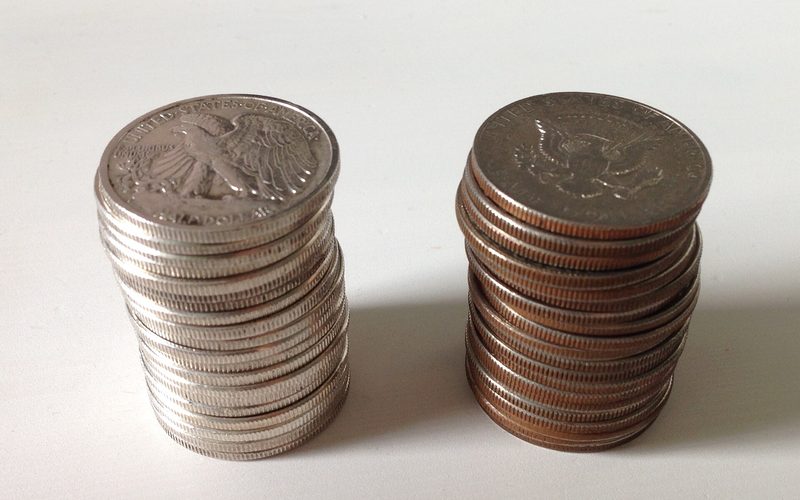
And if an honored promise that quietly stops meaning what it meant is the part that interests you, there is a version you can hold in your hand: a jar of coins that never broke a single promise and lost 91 percent of their value anyway, in Four Quarters, One Year Apart.
Thirty years of payments ended.
The bill went up.
Figures: 30-year fixed mortgage rate and median sales price of houses sold from the Federal Reserve Economic Database, 1994 and current. Average Social Security retired-worker benefit from the Social Security Administration. Florida assessment limitation, homestead exemption, senior exemption, tax certificate and deferral provisions per the Florida Department of Revenue and county property appraisers; combined millage for a Hillsborough County address. State effective property tax rates are 2026 estimates. Share of tax lien auction properties held free of mortgage per research published by the Yale School of Management. Surplus retention in tax foreclosure per Tyler v. Hennepin County. All households and addresses in this piece are constructed scenarios, not real people or properties.
This is general economic writing and not financial advice. Nothing here is a recommendation to buy, sell or hold anything, and none of it accounts for your circumstances.