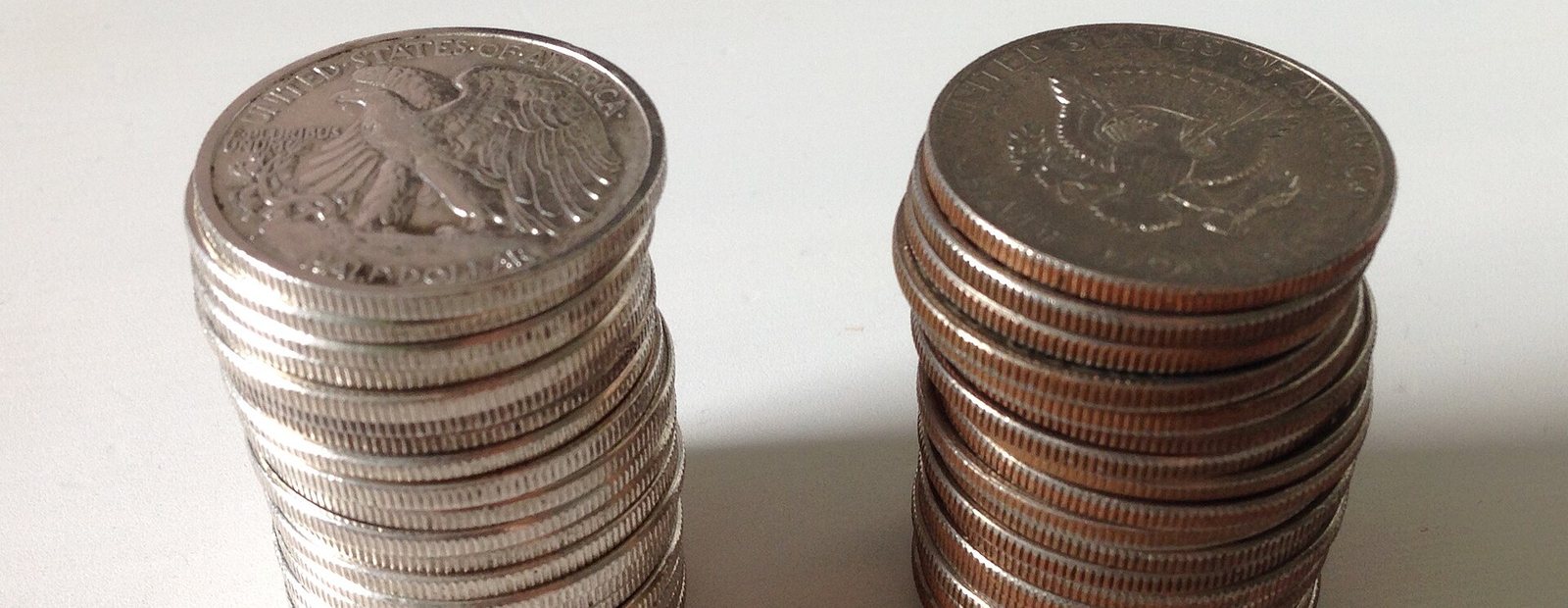
Put two small piles of change on a table.
On the left, four quarters minted in 1964. On the right, four quarters minted in 1965. Twelve months between them. Same size, same weight to the eye, same eagle, same portrait, same words around the rim. Both are legal tender for one dollar and always have been. Neither pile has ever been devalued, recalled, or dishonored. If you walked into a store with either one, you would be handed the same thing.
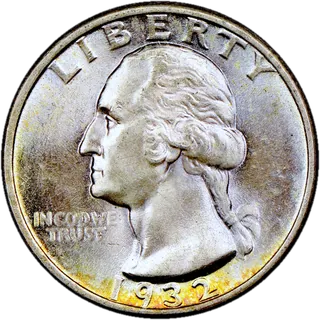 1932
1932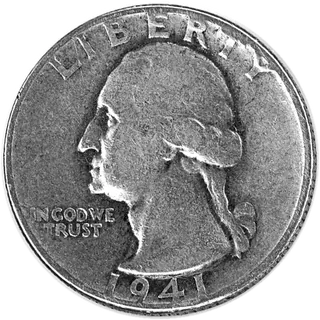 1941
1941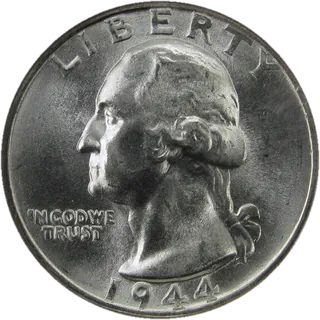 1944
1944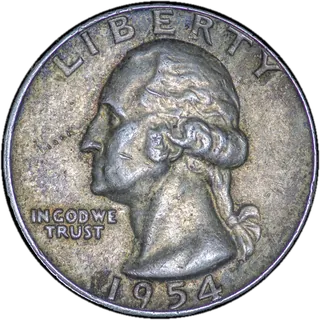 1954
1954
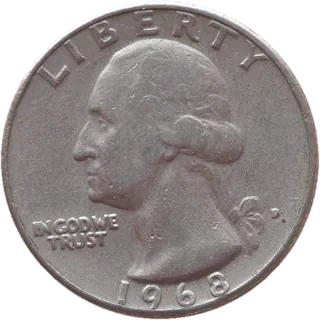 1968
1968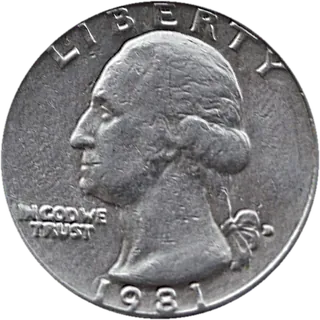 1981
1981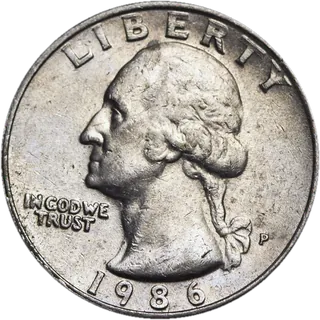 1986
1986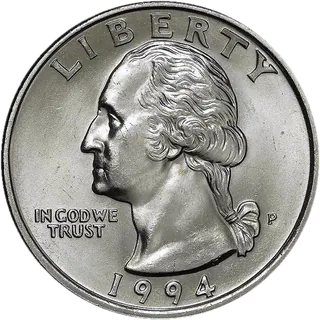 1994
1994
One of those piles is worth a dollar. The other is worth about $46.
Nothing was done to the pile on the right. Everything was done to the pile on the left, in the sense that the pile on the left is what a quarter used to be.
The Law
Until 1964 an American quarter was 90 percent silver. It weighed 6.25 grams, of which 5.625 grams were the metal. The coin was not a claim on silver or a receipt for silver. It was silver, shaped into a disc with a number on it.
In July of 1965 Congress passed the Coinage Act and the President signed it. Dimes and quarters lost their silver entirely and became copper nickel bonded to a copper core, which the Mint calls clad. The half dollar was reduced to 40 percent for a few more years and then it went too.
The stated reason was a genuine coin shortage. Silver had become worth more as metal than as money, which meant every quarter in circulation was slowly turning into a small arbitrage, and the Mint could not keep enough of them in tills. That was true and it was a real problem.
The official assurance at the time was that the change would not matter to ordinary people. The coins would work the same, spend the same, and there would be no advantage in hoarding the old ones.
Within a few years the silver coins had disappeared from circulation almost entirely. Not because anyone was told to remove them. Because when two things circulate at the same official value and one of them is quietly worth more, people keep the better one and spend the worse one. That is not a conspiracy. It is a reflex, and it has a name going back four centuries.
Nobody had to be dishonest for the old coins to vanish. Everyone just had to be paying attention to their own pocket.
In Stages
The silver did not leave all at once.
Dimes and quarters lost it completely in 1965. The half dollar did not. It was cut to 40 percent silver and stayed there for another five years before the metal came out entirely in 1971. The dollar coin followed its own timeline.
And the Mint kept striking coins dated 1964 well after 1964 had ended, partly to fight the shortage and partly because a date freeze meant collectors had less reason to pull specific years out of circulation.
So there is no clean line. There is a date on a law, a different date for one denomination, another for another, and a stretch where coins carried a year that had already passed. Anyone living through it did not experience a switch being thrown. They experienced a few confusing years in which some of their change was worth more than the rest and it was not obvious which.
The version in the history books has a date because a date is easier to print than a process.
The same thing happened to the bond peg twenty years earlier. The short end was quietly let go in 1947 and the long end was defended until 1951, so the policy that supposedly ended on one day in March had in fact been coming apart for four years. The bonds that peg was defending had been sold to 85 million citizens, and they were the ones holding when it came apart.
The Three Dollars
Four 1965 quarters are worth one dollar today. That is what the coin promises and the promise has been kept perfectly.
Four 1964 quarters contain 0.72 troy ounces of silver, which at current prices is worth about $46.66. Nobody promised that. It is simply what the metal is worth to someone who wants metal.
The third number. A dollar in 1964 would need to be $10.77 today to buy what it bought then.
The clad dollar, having been honored in full, every day, for sixty years, buys about 9 percent of what it bought when it was struck. It lost 91 percent of its purchasing power without ever once failing to be worth exactly one dollar.
That is not a default. Nobody broke a contract. The coin did precisely what it said on its face for six decades and the holder was still separated from nine tenths of the value.
There are two ways a lender loses, and this is the quiet one. The loud one has a courtroom.
Forty-Eight Minutes
Purchasing power is easier to feel in time than in dollars, because time does not inflate. An hour is an hour in any decade.
The federal minimum wage in 1964 was $1.25 an hour. So a dollar, four quarters, was 48 minutes of the lowest legal hour of American labor.
Today the federal minimum is $7.25. A dollar is 8.3 minutes.
The same four coins, honored in full, went from most of an hour to less than a coffee break.
Meanwhile the four silver quarters, which nobody guaranteed anything about, are worth about 6.4 hours of that same wage.
That is the entire distinction between money that is a claim and money that is a thing. The claim was honored and lost 91 percent. The thing was never promised anything and kept its footing.
If measuring prices in hours rather than dollars is a frame you find useful, I have written a whole piece using it, on what happened to housing and groceries and pay: A House Used to Cost 6,900 Hours.
The House
The median American home in 1963 cost $18,050. Priced in quarters, that is 72,200 coins. If those coins were 1964 silver quarters, the metal in them comes to about 13,057 troy ounces.
That silver is worth roughly $842,000 today.
The median American home now costs about $415,400.
The silver that bought one house in 1963 would buy two of them today, with a little left over.
The Honest Part
The version of this story that circulates online leaves something out.
Silver did not reliably beat inflation. It has been a bad hedge for long, painful stretches.
In 1991 silver averaged $4.06 an ounce. Four silver quarters were worth $2.94, while a 1964 dollar needed to be $4.39 to have kept pace. The silver had lost to inflation.
In 2001 it was worse. Silver at $4.37 made those four quarters worth $3.16, against $5.71 needed. Anyone who had held silver from 1964 to 2001, thirty seven years, had gone backwards in real terms.
Silver only looks like a triumph right now because silver is currently expensive. It has spent decades being cheap. A person who inherited a jar of these coins in 1995 and sold them in 2001 got a worse outcome than someone who had simply held the paper dollars.
So the lesson here is not buy silver. The lesson is much narrower and much more durable than that.
What Was Actually Taken
The point of the two piles is not that one is a good investment. It is what the comparison reveals about the pile on the right.
The clad quarter never broke a promise. It was never devalued by decree, never recalled, never redenominated. Every single day for sixty years it has been worth exactly one dollar, and every single day the dollar has been worth slightly less.
Nobody experienced that as an event. There was no morning when the coin failed. There was only a very long series of mornings when it worked exactly as advertised and bought slightly less than the morning before.
I have written elsewhere about the national debt being a glass of cranberry juice that gets topped up with water after every sip, so the level never falls and the color fades so slowly that each generation grows up thinking the current shade is simply what cranberry juice looks like. The two piles of quarters are that story with the metaphor removed.
The dilution was not figurative in 1965. It was an alloy. Congress wrote it down, published the specification, and the coins came out of the Mint with the silver gone entirely and a hundred percent of the face value. The glass got topped up and the level never dropped.
And notice who noticed. The people who lived through it noticed, kept the old coins, and told their children about them. The children handled the new ones and had no reference point, so the new ones were simply what quarters were. Nothing was hidden from that second generation. There was just nothing left for them to compare it to.
That is why this keeps working. Not because anyone is deceived, but because the reference point retires.
Who paid for it. Not the government, which got a coin shortage solved and a cheaper coin to make. Not the person who spent their quarters, because a quarter still bought a quarter's worth on the day they spent it.
The cost landed on whoever was holding, and holding for a long time. The saver. The person who put a jar of change on a shelf in 1965 and did nothing wrong for sixty years. That jar is the whole lesson, and it is the same list of payers that monetary dilution keeps producing. Somebody is always holding the thing when the value leaves it.
The Part That Is Still Running
The Coinage Act is a clean example because it happened on a date, in a document, with a specification you can look up. Almost nothing else about monetary dilution is that legible.
The coin change is the one instance where you can hold both versions in your hand and see the difference. The same process runs continuously through everything else, and in every other case there is no 1964 edition to put on the table beside the current one.
You cannot hold a 1964 dollar of purchasing power. You can only hold the number.
If you want the longer version of how that works at the level of the national debt, and why the arithmetic that made it survivable for eighty-five years is now wearing thin, that is the piece this one grew out of: The Debt Doesn't Pop, It Leaks.
Four quarters bought most of an hour of labor in 1964. Four quarters buy eight minutes now. Nobody took anything. Nobody broke anything.
The jar is still on the shelf.
Figures: silver content per the US Mint specification for pre-1965 quarters, 6.25 grams at 90 percent fineness. Silver spot price approximately $64.50 per troy ounce, September 2026. Consumer price index, federal minimum wage and median home sales price from the Federal Reserve Economic Database. Historical silver prices are annual averages.
This is general economic writing and not financial advice. Nothing here is a recommendation to buy, sell or hold anything, and none of it accounts for your circumstances.