Somewhere in this series I wrote that about $22B of federal debt comes due every day and has to be borrowed again at whatever the market will charge that morning. I never said how it happens. There is no poster now, and no peg. There is a room, a calendar, and a short list of firms that are not allowed to stay home.
The Calendar
The Treasury borrows on a schedule.
Every week it sells bills, the short paper that matures in 4, 8, 13 and 26 weeks. Every month it sells 2-year, 3-year, 5-year and 7-year notes. Four times a year, in February, May, August and November, it sells new 10-year notes and 30-year bonds, and in most of the months between it reopens those same issues and sells more of them. The pattern shifts at the edges but the shape has held for decades. There is a Treasury auction most business days of the year.
The debt is never borrowed once. It is borrowed continuously, in a rolling stream of auctions that never stops, and every bond that matures is simply replaced by a new one sold at that week's price.
The Room
Nobody stands up. Bids arrive electronically before a deadline, in two kinds.
A noncompetitive bid says: I will take up to $10M of this issue at whatever yield the auction produces. That is the door for individuals and small buyers. You get filled first, and you accept the price.
A competitive bid names a yield. I will lend at 4.3 percent, or 4.5, or whatever the bidder is willing to accept, in any size up to 35 percent of the whole offering. The Treasury sorts those bids from the lowest yield up and accepts them until the issue is sold. The highest yield it had to accept to get there is the auction's result.
Everybody who won pays that same yield. The bidder who offered to lend at 4.3 and the one who offered 4.5 both get 4.5 if that is where it cleared. This is called a single-price auction, and it means nobody is punished for bidding aggressively, so everyone bids what they actually think the paper is worth. The price the Treasury pays is not negotiated. It is discovered.
The Required
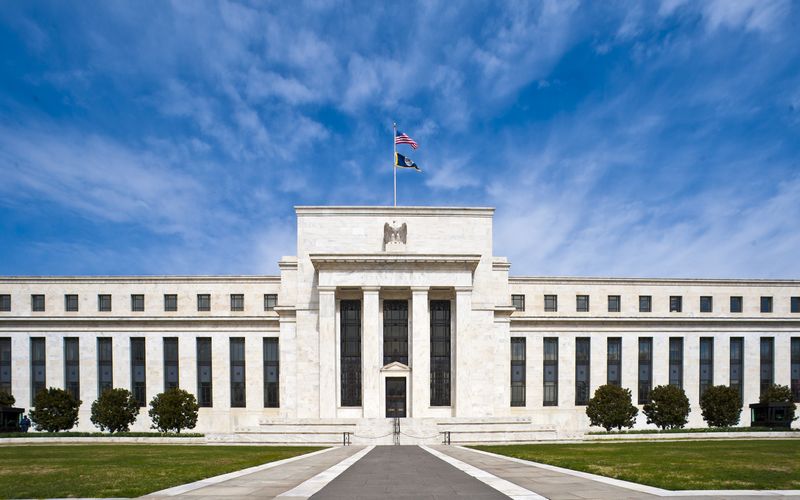
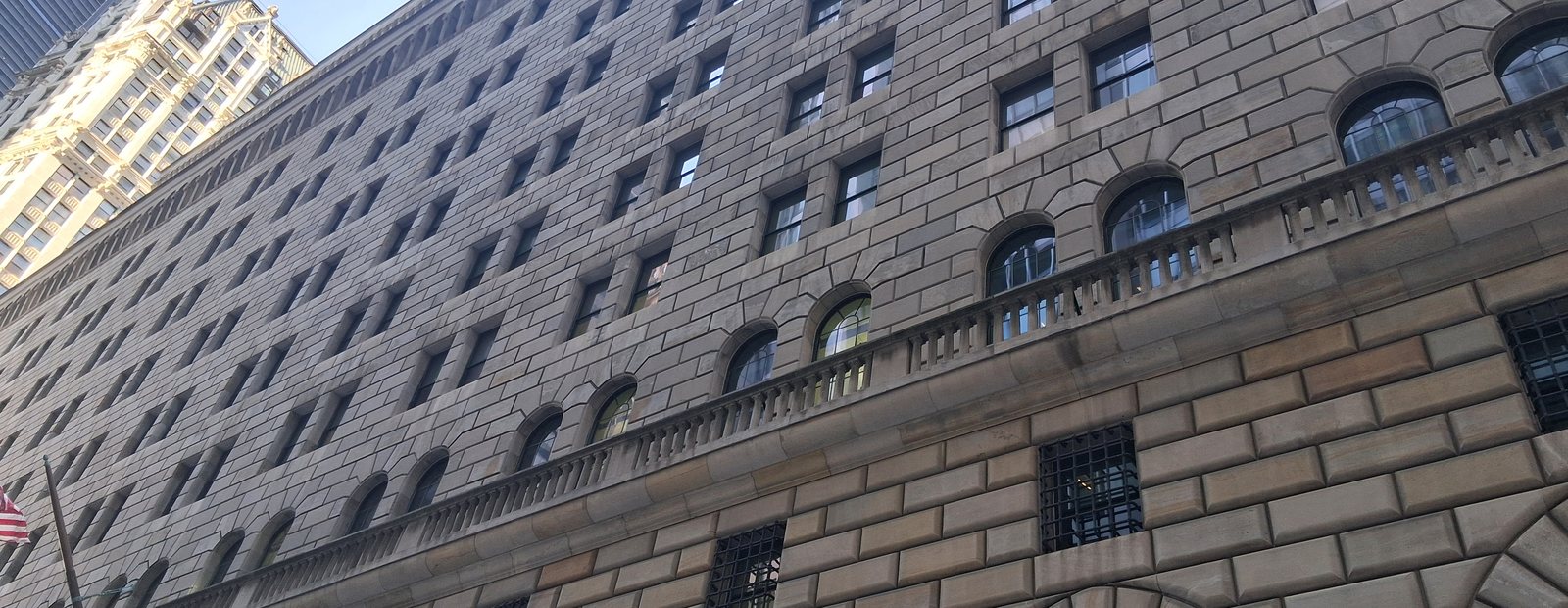
The Federal Reserve Bank of New York keeps a list of firms it calls primary dealers. There are 26 of them, the largest banks and securities houses in the world, and in exchange for the right to trade directly with the central bank they accept an obligation. In the Fed's own words, each is expected to bid on a pro rata basis in all Treasury auctions at reasonably competitive prices.
Not may bid. Not usually bids. Is expected to bid, in every auction, for its share, at a price the Fed would consider reasonable. There is no law that says a Treasury auction cannot fail, and every so often one comes close, with the yield clearing well above where the paper had been trading beforehand. Traders call that a tail, and a bad one makes headlines. But the auction does not fail, and the reason it does not fail is that 26 firms have promised the central bank they will be there.
That is the peg's descendant. In 1942 the Fed guaranteed the price of the debt by buying whatever was needed to hold it. Today it does not guarantee the price. It guarantees the buyers. The 26 dealers set the floor under demand, and the price is whatever the world will pay above that floor.
Who Is in the Room
The dealers buy first, but they do not hold. They distribute. Behind them stands everyone who actually ends up owning the paper.
In 1970 foreign holders owned about 3 percent of the federal debt. The rest was American: banks, insurers, pension funds, the Federal Reserve, and households, many of whom still had war bonds in a drawer. By 2013 the foreign share had reached 34 percent, more than a third of the whole pile, and it has held near a quarter since. Most of that is foreign central banks, which buy Treasuries not for the yield but because their own currencies are managed against the dollar and the paper is where dollars are kept.
The other buyer that does not buy for yield is the Federal Reserve. Its share has swung from 15 percent in 1970 down to 6 percent around 2010 and back up to 15 percent in 2020, and every one of those swings was a policy decision, not an investment. When the Fed buys, it is not asking what the bond is worth. It is deciding what the bond will be worth.
Between those two, something like 35 to 45 percent of the debt in any recent year has been held by buyers who are not pricing it. They are in the room. They are bidding. But they are not doing the thing an auction is supposed to make people do.
The Comfortable Case
The strongest defense of the auction is that it is the deepest, most transparent, most competitive market for anything on earth. Thousands of bidders, results published within minutes, no negotiation, no favors. The dealer obligation is a backstop, the argument goes, not a thumb on the scale. On an ordinary day the dealers take a small fraction of the issue and the rest goes to real money at a real price.
All of that is true, and the auction is genuinely a better mechanism than the poster or the peg. When the world wants Treasuries the price rises, and when it does not the price falls, and that information is worth having. I have written about what the price says when doubt enters the room, and the auction is where it gets said.
On an ordinary day the mechanism works because it is not needed. The obligation matters on the other days. And the two largest classes of holder, the ones who buy by policy rather than by price, are exactly the ones whose behavior the auction cannot discipline, because they were never bidding on value in the first place.
The Peg Without a Peg
So who sets the rate on the debt? Not the Treasury, which takes what the auction gives. Not a peg, which ended in 1951. It is set by an auction whose floor is guaranteed by 26 firms, whose largest buyers are two kinds of central bank, and whose result on any given day is whatever the remaining bidders will pay above that floor.
That is a market. It is also a market with the walls in place before the bidding starts. The rate can rise, and it does, and when it does the whole arithmetic of the debt moves with it. But it rises from a floor that was set by obligation, not by appetite, and if it rises far enough the Federal Reserve has shown, repeatedly, that it will walk back into the room and buy.
In 1942 that was a law. Now it is a habit. The difference is smaller than it looks.
Required
The war sold the debt with a poster that told 85 million people it was their duty to hold. The peace sells it with a list of 26 firms that are told, in more careful language, the same thing.
The public still buys. The public just buys through a pension fund that buys through a dealer that was required to bid. Nobody in that chain is asked to hold for love of country, and nobody needs to be, because the requirement moved from the citizen to the institution and the citizen stopped being able to see it.
$22B a day passes through that room. I have written a short piece on how to picture it.The number is not borrowed from a market that could say no. It is borrowed from a market that has agreed, in advance, to say yes.
Figures: auction rules, bid limits and the single-price mechanism from TreasuryDirect. Auction frequency from the Treasury's published schedules. Primary dealer count and obligations from the Federal Reserve Bank of New York. Holdings by foreign and international investors and by the Federal Reserve as shares of total public debt from the Federal Reserve Economic Database, series FDHBFIN, FDHBFRBN and GFDEBTN.
This is general economic writing and not financial advice. Nothing here is a recommendation to buy, sell or hold anything, and none of it accounts for your circumstances.